

A container for a plot – what do you need to know before you put one up?
A container on a plot of land is a convenient way to gain extra space – whether for storing tools, setting up a workshop or creating a place to relax. More and more private individuals are opting for this solution because of its flexibility and relatively low cost compared to a brick-and-mortar building. However, before a container is placed on the plot, it is worth familiarising yourself with the rules governing its installation and the relevant formalities. This article explains what a container on a plot is used for, what regulations govern its installation and what type of module to choose. It also addresses the issue of renting, which can be more cost-effective than buying for short-term or seasonal use.
What is a container used for on a plot?
A container on a plot of land can serve many purposes, depending on the owner’s needs. It is most commonly used as a storage space, but it can also serve as a workshop, a technical facility during construction, or a place to relax. Its versatility and mobility mean it is well-suited to recreational plots, building sites and back gardens alike.
Unlike a brick gazebo or outbuilding, a container can be delivered, positioned and, if necessary, moved relatively easily. It is a solution for those who need extra space without having to undertake lengthy and costly building work.
A container as a storage room, workshop or technical facility
The most common use for a container on a plot is to store tools, gardening equipment, bicycles or seasonal furniture. A lockable, secure space protects its contents from theft and the elements better than a flimsy gazebo.
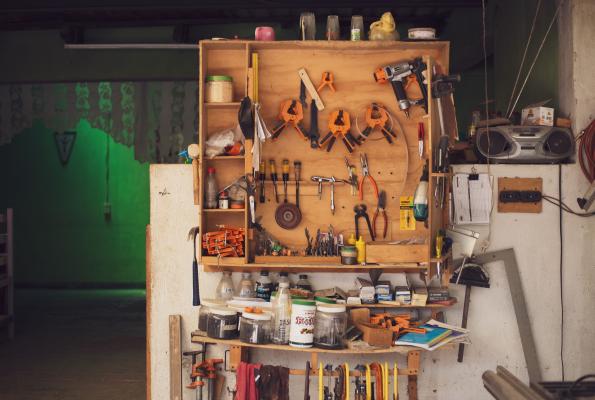
A container can also serve as a workshop – a place for DIY projects, repairs and tasks requiring a covered space.
Used as a technical storage facility, a container can house equipment, installations or stocks of materials. On a building site, it is sometimes used as a temporary warehouse. The choice of fittings and finishes depends on the intended use and frequency of use.
Garden container – for summer and year-round use
A garden container can also serve as a place to relax, a summer recreational space or a year-round facility. In the summer version, used mainly during the warmer months, basic fittings are sufficient. For year-round use, an insulated container is required to ensure thermal comfort regardless of the season.
Modern modules with glazing and an attractive finish are available on the market; these look more appealing than the standard model and blend in better with the garden setting. They can also be fitted with electrical installations, heating and basic facilities, creating a comfortable relaxation area. The standard of finish is chosen depending on whether the container is to be used seasonally or all year round.

Do you need a permit to place a container on a plot?
The issue of formalities is one of the most important aspects of placing a container on a plot of land and is the source of the most uncertainty. Whether a notification or permit is required depends primarily on how permanently the container is fixed to the ground and its planned duration of use. The information below is of a general nature – as regulations are sometimes interpreted differently and the situation depends on local circumstances, it is advisable to consult the relevant authority before placing a container.
A skip as a temporary structure – what are the rules?
Under Article 29 (1) (7) of the Building Act, the construction of temporary structures not permanently fixed to the ground and intended for demolition or relocation to another site does not require a building permit, but a notification. The deadline for removing or relocating the structure is specified in the notification; however, it must not exceed 180 days from the date of commencement of construction. After this period, the container must be removed, relocated or legalised as a permanent structure.
The notification usually specifies the container’s location, its intended use, the planned duration of use and a site plan. If a container is set on foundations, permanently connected to utilities and intended for long-term use, it is treated as a building; therefore, as a general rule, this entails the obligation to obtain planning permission. The key factor is thus the permanence of its attachment to the ground, rather than the container’s structure itself.
Planning conditions and the local development plan
Before placing a container, it is worth checking the local spatial development plan (MPZP) for the plot in question. The plan specifies the permissible use of the land and may exclude certain types of structures. Placing a container in a manner inconsistent with the plot’s designated use – for example, a commercial container in a residential area – may result in an order for its removal.
Failure to complete the required formalities may result in the container being deemed an unauthorised structure. The consequences may include administrative fines, an order to demolish or relocate it, as well as difficulties when selling the property. Therefore, even in the case of a temporary structure, it is worth ensuring you are aware of the procedures applicable in that specific location.
Which container should you choose for your plot? Types and specifications
The choice of container for a plot depends on its intended use, duration of use and the level of comfort required. A simple storage unit is sufficient for a tool shed, whilst a workshop or leisure space requires a higher-standard container, complete with electrical installations and interior finishes. Size is also important – ranging from compact units to full-size modules.
It is worth paying attention to the quality of the construction and insulation, especially if the container is to be used for a longer period. A well-chosen module will last for years, and its specifications will translate into comfort and running costs. When making your choice, it helps to determine whether the container will be used seasonally or all year round.
Insulated vs. uninsulated containers
The main difference between an insulated and an uninsulated container relates to thermal comfort and the possibility of year-round use. An uninsulated container works well as a storage room or warehouse where the internal temperature is irrelevant. It is cheaper and sufficient for storing equipment that is resistant to temperature fluctuations.
An insulated container, with insulation in the walls, floor and roof, allows for use regardless of the season. This is essential if the container is to serve as a workshop used in winter, a recreational space or a back-of-house area where people spend time. Insulation also protects against condensation, which in an uninsulated container can damage stored items. The choice therefore depends on how and when the container will be used.

Renting a container for a plot – is that possible?
Renting a container can often be more cost-effective than buying one, particularly for short-term or seasonal use. It allows you to use the unit only for as long as you need it, without having to invest in purchasing it or managing the equipment afterwards. This solution works well, for example, when a container is required for the duration of specific work on a plot of land.
Algeco offers modular container hire, and the 360° Service includes transport, assembly and technical support. It is worth bearing in mind that Algeco’s offering focuses primarily on solutions for business, construction and industry; therefore, the scope of hire for private use is best arranged individually with a representative. Regardless of how the container is acquired, the formalities involved in placing it on a plot of land remain the same and must be checked before delivery.

FAQ – a container for a plot
Does a container on a plot require notification or planning permission?
A container that is not permanently fixed to the ground and is intended to be removed or relocated within 180 days requires notification, not planning permission (Article 29(1)(7) of the Building Act). A container set on foundations, permanently connected to utilities and intended for long-term use is treated as a building and, as a general rule, requires a planning permission. The regulations are sometimes interpreted in different ways, so it is worth consulting the relevant authority.
How long can a container be kept on a plot without any formalities?
A temporary structure not permanently attached to the ground may be kept on the basis of a notification for a maximum of 180 days from the date of commencement of construction. After this period, the container must be removed, relocated or legalised as a permanent structure, which involves obtaining planning permission. Submitting successive notifications solely to circumvent this limit is not the correct approach.
Can a container on a plot be connected to electricity and water?
A container can be connected to the electricity and water and sewerage systems; however, permanent connections may affect the classification of the structure. Deep, permanent connections are sometimes interpreted by the authorities as a sign of a permanent attachment to the land, which may mean that a planning permission is required. It is therefore worth considering how to connect the utilities in the context of the planned duration of use and the associated formalities.
Which type of container is suitable as a year-round storage unit on a plot?
For year-round use, you’ll need an insulated container with insulation in the walls, floor and roof, which ensures thermal comfort and protects the contents from condensation. If the container is to be used solely as seasonal storage for equipment that can withstand temperature fluctuations, a non-insulated module – which is cheaper – will suffice.
How much does it cost to hire a container for a plot?
The rental cost depends on the type and size of the module, the rental period, the scope of fittings, and the costs of transport and assembly. An insulated, finished container will be more expensive than a basic storage module. As Algeco’s range focuses on business and construction applications, it is advisable to check with a representative for an exact quote and availability for private use.