
The Central Transport Hub Construction Site: Why Social Infrastructure Is Not a Cost, but a Risk Management Tool
In megaprojects such as the CPK, construction support services cease to be merely a cost item in the budget. They become a tool for managing operational, personnel, schedule, and safety risks. In other words, this infrastructure “buys” time, reduces the number of adverse events, and helps maintain process predictability.

CPK 2026: A Scale That Changes the Game
The CPK (pl. Cenralny Port Komunikacyjny - Central Transport Hub) is a project that includes, among other things, the construction of a central airport and a rail component. The parameters commonly cited in public discourse are approximately 3,000 hectares for the airport site and a planned capacity of 40 million passengers per year (according to plans from late 2023). By comparison: Warsaw Chopin Airport covers approximately 500–680 ha (depending on the source), which means that the CPK’s area is approximately 4–6 times larger.
The rail component of the project is described in the original plans as approximately 1,600 km of new lines leading to the CPK/Warsaw hub. Regardless of how the program’s details evolve, the implications for contractors remain constant: this is a project with a geographically dispersed and phased work structure, requiring infrastructure to support operations “on the scale of a small city.
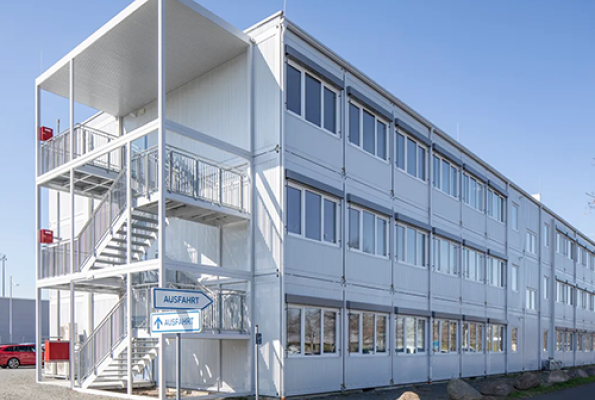
Why are employee amenities a “risk” rather than a “cost”?
Delay costs in a megaproject rarely stem solely from construction technology. More often, they result from an accumulation of micro-bottlenecks: queues at the entrance, lack of check-in space, inadequate restroom facilities, chaotic crew tracking, and delayed responses to health and safety incidents.
Example calculation (model): the entrance gate as a bottleneck
Let’s assume that manual document checks cause an average delay of 45 minutes per person per day during peak entry hours (assumption).
0.75 h × 380 people = 285 man-hours/day.
At a rate of PLN 100/h, this amounts to PLN 28,500/day in “non-productive” labor costs.
The above is a simple model illustrating the mechanism whereby, on a large scale, even a minor bottleneck becomes a real, significant cost.
High crew turnover: standard in construction, a critical problem in megaprojects
Construction sites are characterized by seasonality and fluctuations in the number of subcontractor workers across successive project phases. A major contractor must maintain up-to-date records and control over these resources. In practice, this requires a support infrastructure that is properly prepared, i.e.,
- scalable (capable of handling sudden spikes in headcount),
- reconfigurable (changes functions as the project progresses),
- integrated with safety (access control, zones, evacuation).
Legal minimums are not enough: what health and safety entails on a mega-scale
The Regulation of the Minister of Infrastructure of February 6, 2003, sets minimum health and safety standards for construction work.
In the practice of megaprojects, the “minimum” is insufficient because of the factors of scale and the dispersion of work. Therefore, operational solutions that ensure the following become the realistic standard:
- Real-time access control and crew tracking
- In large projects, identification-based systems (e.g., RFID) are used as a risk-reduction mechanism: reducing queues, monitoring the number of people on-site, and supporting evacuation and compliance. (Technology and its applications in construction are widely described in industry literature on RFID).
- First aid stations and response capability
- On a macro scale, response time is critical. In linear projects, mobile stations that follow the work front make sense.
- Briefing rooms and coordination centers
- Daily health and safety briefings and team coordination require a properly designed and prepared space. Without this, the practice of holding impromptu meetings in hallways or “at the gate” reduces the quality of communication and, quite simply, safety.
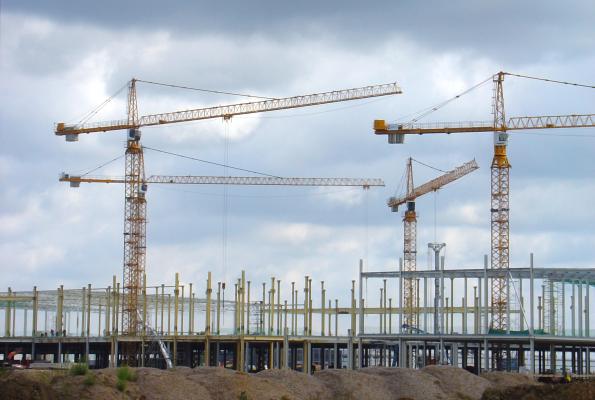
Phases of a megaproject: Why isn’t there a single template for support services?
- Preparatory phase: small teams, limited scale, high mobility; requirements: office, restrooms, tool storage
- Main phase: numerous teams (numbering up to hundreds of people); requirements: changing rooms, showers, cafeterias, supervision offices, warehouses, medical stations,
- Finishing/acceptance phase: less manual labor, more specialists; needs: offices, meeting rooms, laboratories, IT infrastructure.
The most important conclusion is that support facilities should always be designed and considered as a mandatory element of the schedule, rather than as an afterthought following contract signing. Improvisation in this area can have serious negative consequences, affecting the timeliness and safety of the entire project’s execution.
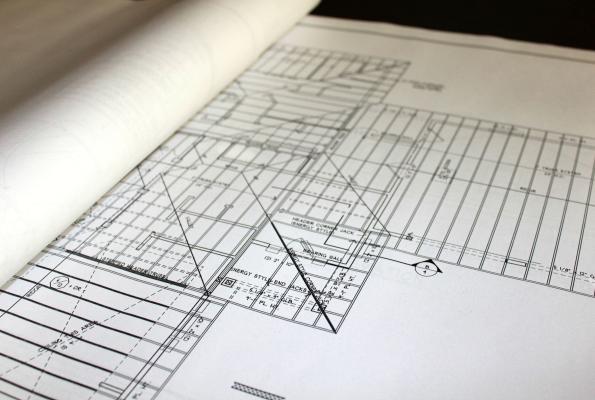
Facilities as part of a bid proposal: what to highlight for the contracting authority
In practice, contracting authorities are increasingly evaluating a contractor’s competence and maturity (occupational safety and health, environmental compliance, process organization), rather than just price and completion deadlines. In megaprojects, the reliability of the operational plan and the selection of appropriate, proven suppliers provide additional assurance that the agreed-upon schedule will be met.
For this reason, the bid should include the following elements:
- zoning plan (staff/office/warehouse/technical),
- parameters and capacity (number of people, equipment (showers, safety lockers, etc.), as well as the required floor space),
- procedures (access, evacuation, health and safety inspections, maintenance),
- mobilization schedule (what arrives and when, with a direct link to the project phases).
Algeco in megaprojects: the “ready-to-go” approach and 360° service
From the contractor’s perspective, it is crucial to minimize risks related to “mobilization time” and resource availability. Algeco deliberately highlights the advantages of its 360° service model, as well as its wide regional coverage and extensive fleet of modules. In large-scale projects, it is not just the delivery of the modules and their initial setup that matter. It is important to consider their location, particularly in terms of access and utility connections, as well as maintenance, reconfigurations, and any work or modifications resulting from the project’s implementation schedule.
On the scale of projects such as the CPK, a single day’s delay can cost tens of thousands of zlotys. Properly designed infrastructure is the first step toward avoiding such costs on a daily basis.
Sources:
-
WNP.pl (2025-12-23). Znamy plan CPK na 2026 rok. 50 przetargów za 40 mld zł.
https://www.wnp.pl/logistyka/znamy-plan-cpk-na-2026-rok-50-przetargow-za-40-mld-zl%2C1016507.html
-
RDC.pl (2026-02-06). Plany CPK na 2026 rok. Spółka chce ogłosić przetargi na 40 mld zł.
https://www.rdc.pl/aktualnosci/polska/cpk-przetargi-spolka-plany_nvFEfCRdgXivcWeT0lG1
-
NIK (2025-09). Transkrypcja wideo: konferencja prasowa dot. CPK (m.in. ok. 3000 ha i 40 mln pasażerów rocznie wg planów z końca 2023).
https://www.nik.gov.pl/aktualnosci/transkrypcje/transkrypcja-wideo-konferencja-prasowa-cpk-092025.html
-
ISAP Sejm (2003). Rozporządzenie Ministra Infrastruktury z dnia 6 lutego 2003 r. w sprawie bezpieczeństwa i higieny pracy podczas wykonywania robót budowlanych (Dz.U. 2003 nr 47 poz. 401).
https://isap.sejm.gov.pl/isap.nsf/DocDetails.xsp?id=WDU20030470401
-
ISAP Sejm (PDF) (2003). Tekst rozporządzenia (Dz.U. 2003 nr 47 poz. 401).
https://isap.sejm.gov.pl/isap.nsf/download.xsp/WDU20030470401/O/D20030401.pdf
-
Sejm RP (Interpelacja) (bd). Informacja o założeniach: 1600 km nowych linii kolejowych w ramach programu.
https://www.sejm.gov.pl/Sejm9.nsf/InterpelacjaTresc.xsp?key=BP5D3E
-
WNP.pl (2019-03-25). Centralny Port Komunikacyjny wymusi budowę 1600 km linii kolejowych.
https://www.wnp.pl/budownictwo/centralny-port-komunikacyjny-wymusi-budowe-1600-km-linii-kolejowych%2C342432.html
-
Lotnisko Chopina (PDF, 2017). Wyciąg z opracowania (m.in. informacja o powierzchni ok. 680 ha).
https://lotnisko-chopina.pl/uploads/user_files/ochrona_srodowiska/mapa%20akustyczna%202017/Wyci%C4%85g%20z%20cz%C4%99%C5%9Bci%20opisowej%20-%20opracowania.pdf
-
Budimex (2018). Sprawozdanie na temat informacji niefinansowych (wzmianki o sezonowości i rotacji podwykonawców).
https://www.budimex.pl/repository/about/walne/2019/2018_Grupa_Budimex_Sprawozdanie_na_temat_informacji_niefinansowych.pdf
-
RFID Journal (PDF) (bd). RFID: Potential of RFID in the Construction Sector.