

Catering container – how to set up a mobile sales outlet?
Container-based catering is no longer just a stopgap solution; it has become a conscious choice for entrepreneurs seeking flexibility and lower start-up costs. Cafés, ice-cream parlours, street food stalls and food outlets at festivals are increasingly being set up in container modules, which can be quickly set up, easily moved and adapted to the seasonal nature of the business. In this article, we’ll explain why food service containers are gaining in popularity, how they compare to traditional premises, and what you need to prepare in technical and administrative terms. We’ll also advise you on how to choose the right container for your planned business.

Why are catering containers becoming more popular?
The main advantage of a food container is how quickly it can be set up. A traditional premises requires finding a suitable space, signing a long-term lease and carrying out costly interior refurbishment. A container can be fitted out for a specific business and set up at the chosen location in a much shorter time, which shortens the path from idea to first sale.
The second advantage is mobility and flexibility. A food outlet in a container is not tied to a single address – it can be moved to a busier spot, set up seasonally by the water or in the city centre, and dismantled once the season is over. For seasonal or trial businesses, this means lower risk and better alignment of costs with actual revenue.
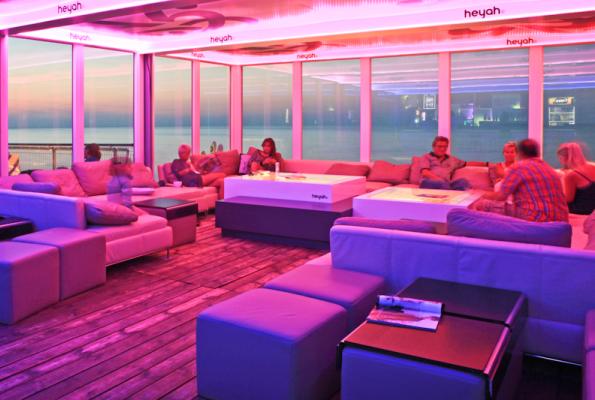
The third factor is aesthetics. Modern modules with glazing and the option to customise the façade look attractive and catch customers’ attention. Such a container can become a recognisable visual element of the brand, rather than just a makeshift point of sale.

A container versus a traditional restaurant – which is more profitable?
A traditional restaurant involves high fixed costs. Rent in an attractive location, service charges and a long-term lease place a strain on the budget regardless of the season or turnover. Fitting out the interior for catering – installations, ventilation and finishes – is an additional, one-off expense which may not pay for itself if the business is only operational for a short period.
Renting a container allows for better control over these costs, as well as the ability to run a business seasonally or test a new concept. The business owner thus avoids tying up capital in fitting out the premises.
A traditional premises remains the more advantageous option for year-round operations in a fixed location, where an established presence in one place is key. A container, on the other hand, works well where flexibility, mobility and the ability to start or cease operations quickly are important.

What can you build from a catering container?
The catering module is so versatile that it can be used for a variety of business activities – from a small café to a fully-fledged event venue. Its specific purpose is determined by the interior layout and fittings, which are selected to suit the business’s offering.
A container café
A container café requires relatively little space. All you need is room for a coffee machine, a counter, refrigeration facilities and a service area. The glazed façade creates a welcoming space, whilst the compact footprint keeps costs at a reasonable level. This format works well in locations with high footfall – near parks, pedestrianised areas and recreational spaces. A container café can operate independently or as a complement to another business, for example alongside a leisure equipment hire point. Its modular design allows the size to be tailored to expected footfall and, if necessary, the space can be expanded with an additional module.
A stationary version of a food truck – the street food container
A street food container combines the advantages of a food truck with a larger and more stable space. Unlike a vehicle, it does not require a parking space or MOT tests, whilst offering more space for back-of-house areas and food preparation. It works well for serving main meals (burgers, tortillas), as well as snacks (chips) or desserts (ice cream, chocolate-covered fruit). A stationary street food outlet in a container can be set up in a food court, near event venues or as a standalone sales point. The larger work surface area compared to a food truck means more efficient service during peak hours.
A catering pavilion at an event or festival
At festivals, fairs and outdoor events, a catering pavilion built from containers provides professional facilities and leaves a positive impression on event attendees. It can be set up for the duration of the event and dismantled once it has finished, which suits the temporary nature of such events. Algeco event modules are ideal not only as catering points, but also as ticket offices and service points during outdoor events. A catering pavilion at an event requires well-thought-out logistics – access to utilities, refrigeration facilities and the ability to handle high footfall efficiently within a short timeframe. Here, a container provides a durable, lockable space that is safer than a tent or a lightweight structure.

Technical and formal requirements – what do you need to do?
Setting up a food outlet in a container requires compliance with technical and administrative requirements. It is worth planning these in advance, as they affect the opening date and ensure the business operates in accordance with the regulations.
Utilities, ventilation, sanitary facilities
A food outlet requires access to electricity, water and waste water disposal. The module must be connected to the mains or temporary solutions, such as water and waste tanks, must be provided. Ventilation suited to the type of food being prepared is also essential, as are sanitary facilities that comply with catering regulations.
Algeco offers modules with water and drainage systems, as well as the option to install air conditioning and additional equipment. Containers for catering facilities can be configured to suit a specific business profile, including technical and sanitary facilities.
Permits and the Sanitary and Epidemiological Station
Catering operations are subject to sanitary supervision; therefore, the premises must meet the requirements of the Sanitary and Epidemiological Station regarding the preparation and sale of food. These include, amongst other things, appropriate facilities, access to running water and the proper organisation of work areas.
The formalities involved in setting up a container depend on its location and duration of use. In some cases, a simple notification is sufficient; in others, a permit is required. Given the changing nature of regulations and local variations, it is advisable to consult the relevant authority about your planned project before commencing operations.
How do you choose the right catering container?
Choosing a module starts with defining the nature of the business and the expected footfall. A café requires a different kind of space to a large street food bar, whilst a seasonal outlet needs different solutions to a year-round venue. It is worth analysing how many people the outlet will serve, what equipment is essential, and whether space will be needed for customers.
The duration of the business is also important. For a seasonal or event-based project, short-term hire will be more advantageous, as it allows you to use the container only during the sales period. Algeco offers modules for both hire and sale, and the 360° Service includes transport, assembly and technical support. To select the right configuration for a specific business idea, it is worth contacting an Algeco representative to discuss the technical and administrative requirements of the planned business.

FAQ – catering container
How much does it cost to hire a catering container?
The cost of renting a catering container depends on several factors: the rental period, the type and size of the module, and the scope of fittings and installations. A unit with full technical and sanitary facilities will cost more than a basic module. An accurate quote requires details of the business profile and configuration, so it is best to discuss this individually with an Algeco representative.
Does a catering container require planning permission?
This depends on the location, duration of use and nature of the structure. For temporary structures, in some cases a simple notification is sufficient, whilst in others planning permission is required. Regulations may vary locally, so it is advisable to consult the relevant authority before installing the container.
How do you connect water and electricity to a catering container?
A catering container is connected to the mains electricity and water and drainage networks at its installation site. Where permanent access to utilities is not possible, temporary solutions are used, such as water and waste tanks and power from a generator. Algeco modules can be fitted with water, drainage and electrical systems tailored to catering requirements.
Can a container be hired for a single season or event?
Yes, Algeco offers short-term hire, which is ideal for seasonal operations as well as events and festivals. This allows you to use the module only during the operating period, without having to purchase or maintain the facility all year round. Once the hire period ends, the container is dismantled and collected.
What are the dimensions of a typical catering container?
A catering container is usually based on a standard module measuring approximately 6055 × 2435 mm, which gives a floor area of around 14 m². Depending on your needs, you can choose a smaller module for a compact service point or combine several units to create a larger space with separate back-of-house facilities and a customer area.